News

· What basic filter manufacturing equipment does a new factory need?
· What equipment can be added for higher efficiency later?
· What equipment is needed for different filter product types?
· How should new factories plan basic and upgrade configurations?
For a new filter factory, choosing filter manufacturing equipment should not start with “buying a full production line immediately.” A better way is to understand the basic production steps first, then decide which equipment is necessary at the beginning and which machines can be added later when orders become stable.
Most filter production projects include several common processes: media feeding, pleating, gluing, cutting, assembly, curing, and testing. However, not every new factory needs all equipment on day one. The right equipment list depends on filter type, material, product size, production volume, budget, and future upgrade plan.
New factories should build equipment step by step: start with core machines that make production possible, then add efficiency and quality-control equipment as orders grow.
In the starting stage, the goal is to complete the essential production process without over-investing. For many new factories, the basic equipment usually includes a pleating machine, basic gluing machine, cutting machine, and manual assembly tools. These machines allow the factory to process filter media, create filter packs, apply basic bonding, cut materials to size, and complete simple assembly work.
| Basic Equipment | Main Function | Why New Factories Need It | Common Filter Products |
|---|---|---|---|
| Filter Pleating Machine | Folds filter media into regular pleats. | Pleating is the foundation for many air filtration products and directly affects filter area, appearance, and consistency. | HEPA filter, HVAC filter, air filter, cabin filter, industrial filter |
| Basic Gluing Machine | Applies glue for pleat fixing, bonding, or simple assembly support. | Helps keep filter media structure stable and reduces dependence on manual gluing. | HEPA filter, mini-pleat filter, panel filter, cabin filter |
| Filter Cutting Machine | Cuts filter media or pleated filter packs to required size. | Accurate cutting helps control finished filter size, reduce material waste, and improve assembly efficiency. | Cabin filter, HEPA filter, HVAC filter, air filter, panel filter |
| Manual Assembly Tools | Supports frame assembly, edge fixing, inspection, packing, and small-batch adjustment. | Useful for new factories with many product models and limited early order volume. | Most small-batch or custom filter products |
This basic configuration is suitable when a factory is still testing product direction, building customer samples, or producing small to medium batches. It gives the factory enough production capability while keeping the initial investment under control.
After the factory receives stable orders, the next challenge is usually efficiency, consistency, labor cost, and quality control. At this stage, buyers can consider adding frame forming machine, curing oven, strips bonding machine, testing machine, or more automated process connection equipment.
Suitable for HVAC panel filters, panel air filters, and filters with outer frame structures. It improves frame size consistency and assembly efficiency.
Used when glue, sealing material, or PU material needs controlled curing. It helps improve bonding strength and reduce unstable natural drying.
Used to support pleat separation, reinforcement, or filter pack bonding. It is helpful for filters that need more stable structure or spacing control.
Helps check resistance, sealing, size, leakage, or appearance consistency. Testing equipment is especially useful when customers require quality records.
Higher efficiency equipment should be added after the main product direction is clear. Otherwise, a new factory may buy machines that do not match its final production model.
The equipment list should change according to the filter product. HEPA filters, HVAC filters, PU air filters, and cabin filters may all use filter media, but their production processes and key equipment requirements are different.
| Filter Product Type | Basic Equipment | Upgrade Equipment | Key Production Focus |
|---|---|---|---|
| HEPA Filter | Pleating machine, hot melt gluing machine, cutting machine, manual frame assembly tools. | Testing machine, automatic gluing system, frame assembly support, sealing equipment. | Pleat accuracy, glue stability, sealing quality, leakage control. |
| HVAC Filter | Pleating machine, cutting machine, basic frame assembly tools. | Frame forming machine, strips bonding machine, testing machine, automatic assembly support. | Frame size, airflow resistance, assembly efficiency, batch consistency. |
| PU Air Filter | Pleating support, cutting tools, PU gluing or foaming equipment, molds. | Curing oven, automatic PU dispensing system, mold handling support, testing equipment. | PU sealing strength, mold matching, curing stability, finished shape consistency. |
| Cabin Filter | Pleating machine, slitting or cutting machine, basic bonding equipment. | Side sealing equipment, activated carbon media handling support, automatic cutting and stacking. | Compact size accuracy, neat pleats, clean edges, stable batch output. |
For a new factory, it is better to select one or two main filter product directions first. Trying to produce too many filter types at the beginning may make equipment planning more complicated and increase unnecessary investment.
New factories do not always need a full line from the beginning. A staged configuration can help balance investment and production capability. The first stage should make production possible. The second stage should improve efficiency, stability, and quality control.
• Filter pleating machine
• Basic gluing or bonding equipment
• Filter cutting machine
• Manual assembly tools
• Basic inspection tools for size and appearance
• Frame forming machine
• Strips bonding machine
• Curing oven
• Filter testing machine
• Semi-automatic or automatic process connection
| Factory Stage | Main Goal | Recommended Equipment Logic |
|---|---|---|
| New Factory | Start production and verify product direction. | Buy core machines first. Keep the process flexible and avoid over-complex automation too early. |
| Growing Factory | Improve efficiency and reduce manual variation. | Add equipment for gluing, frame forming, cutting accuracy, curing, or process connection. |
| Stable Production Factory | Increase output and strengthen quality control. | Consider a more complete production line with testing equipment and higher automation. |
A common mistake for new factories is to focus only on one main machine while ignoring upstream and downstream processes. For example, a buyer may choose a pleating machine but forget to consider media feeding, gluing, cutting, frame assembly, curing, or testing. As a result, the production process may not run smoothly after installation.
Not every product needs every step, but every buyer should review the whole process before purchasing equipment. This helps avoid bottlenecks, missing tools, mismatched machine capacity, or layout problems in the workshop.
• Filter product: What filter type will be produced first?
• Filter material: What media will be used, such as filter paper, nonwoven, PP, fiberglass, activated carbon media, or composite media?
• Product size: What are the main length, width, height, pleat height, and frame size requirements?
• Process steps: Does the product need pleating, gluing, cutting, frame forming, PU foaming, curing, or testing?
• Production stage: Is the factory starting small, preparing for stable batch orders, or planning high-volume production?
• Upgrade plan: Which machines can be added later when orders increase?
For new factories, the best equipment list is not always the longest list. It should be a practical plan that supports current production while leaving room for future growth.
MOER Machinery provides filter making machine solutions for different production stages, including basic start-up equipment, process upgrade equipment, and complete filter production line planning.
If you are preparing to build a new filter factory, you can share your target filter type, material, size range, capacity plan, budget, and workshop layout with us. Our team can help you review the process and recommend a practical equipment configuration.
Previous: NULL
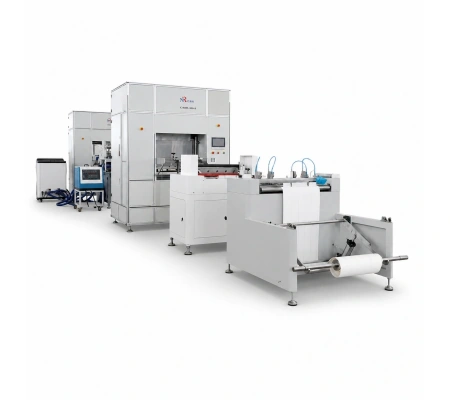
Pleating Height: 100–400 mm
Pleating Speed: 0–200 pleats/min
Max. Media Width: 700 mm
Max. Product Width: ≤650 mm
Production Capability: 25 m/min
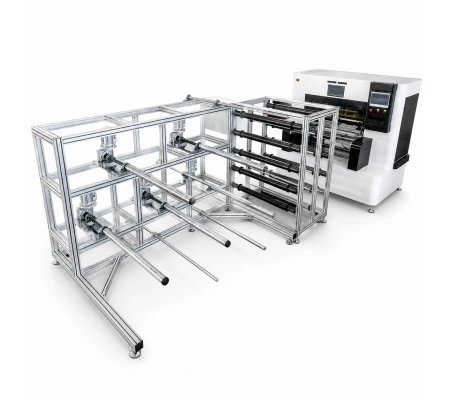
Working Width Range: 700–3000 mm
Pleating Height Range: 4–150 mm
Pleating Speed: Up to 400 pleats/min
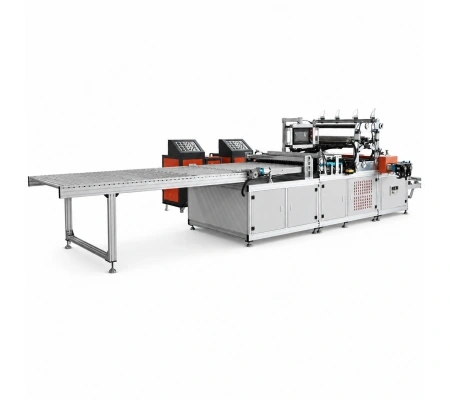
Max. Media Pleating Width: 1300 mm
Pleat Depth Range: 25–300 mm
Maximum Pleating Speed: 8–10 m/min
Hot Melt Nozzle Pitch: 25.4 mm
Online Slitting Cutters: 5 pcs
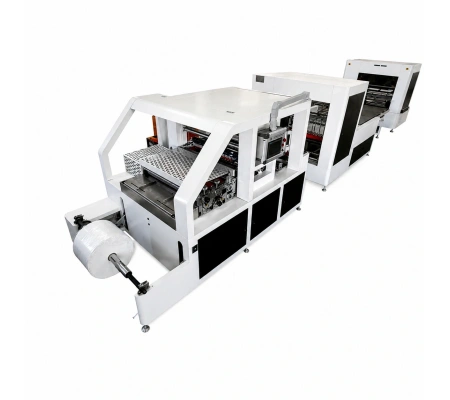
Max. Media Pleating Width: 700 mm
Pleat Depth Range: 16–100 mm
Maximum Pleating Speed: 8–10 m/min
Hot Melt Nozzle Pitch: 25.4 mm
Online Slitting Cutters: 5 pcs

Quick response within 24 hours

Expert advice tailored to your needs

End-to-end support for your success