
News

A pocket filter is used in HVAC and ventilation systems to capture airborne dust and particles using multiple fabric pockets with a large filtration area.
Also called an HVAC bag filter, it is commonly installed in air handling units, commercial buildings, factories, and industrial ventilation systems. Its multi-pocket structure provides a larger filtration area than a simple flat panel filter and can hold more dust under suitable operating conditions. Depending on its filtration efficiency, a pocket filter may serve as a general ventilation filter or a prefilter before HEPA filtration.
A pocket filter captures airborne particles as air passes through several fabric pockets attached to a supporting frame.
The filtration process is straightforward:
The pockets create a larger filtration surface within a compact frame. This helps distribute airflow and provides more space for dust accumulation. Actual airflow resistance and dust-holding capacity depend on the filter media, pocket design, and operating conditions.
Pocket filters are mainly installed in air handling units (AHUs), central ventilation systems, and commercial or industrial HVAC equipment.
| Application | Purpose of Pocket Filters |
|---|---|
| Offices and Shopping Malls | Remove airborne dust and particles from building ventilation air. |
| Schools and Hotels | Support indoor air quality and protect HVAC equipment. |
| Factories and Workshops | Filter supply air and reduce dust entering ventilation equipment. |
| Hospitals and Laboratories | Provide preliminary or intermediate filtration before higher-efficiency filter stages where required. |
| Cleanroom Ventilation | Reduce particle loading on downstream HEPA filters. |
| Industrial Air Handling Units | Filter intake, supply, or recirculated air according to the system design. |
In multi-stage systems, pocket filters are often installed after a coarse prefilter and before a final high-efficiency filter. They can also serve as the final filtration stage in general ventilation systems when their efficiency meets the application requirements.
A pocket filter typically consists of filtration media, multiple fabric pockets, and a supporting frame. Material selection depends on the required filtration efficiency, airflow, and operating environment.
Some specialized pocket filters also include activated carbon media for certain odors or gaseous contaminants. However, standard particle filters do not automatically provide gas or odor removal.
These filters have different structures and filtration purposes. They may be used individually or together in a multi-stage HVAC system.
| Feature | Pocket Filter | Panel Filter | HEPA Filter |
|---|---|---|---|
| Structure | Multiple fabric pockets | Flat or pleated media within a frame | High-efficiency media pack with a sealed frame |
| Filtration Area | Large area from multiple pockets | Depends on the panel design | Depends on media and pleat design |
| Main Application | General HVAC filtration and HEPA prefiltration | General ventilation and prefiltration | High-efficiency particle filtration |
| Typical Position | Intermediate or final stage in general HVAC; upstream of HEPA | Often an initial filtration stage | Final high-efficiency stage where required |
A pocket filter is not automatically a HEPA filter. Its filtration efficiency must be verified against the relevant product classification. For general ventilation filters, ISO 16890 is commonly used to describe particle filtration performance.
Before selecting a pocket filter for an HVAC system, check the following specifications:
The number of pockets alone does not determine filtration performance. The filter media, pocket dimensions, airflow distribution, and system requirements must be considered together.
A pocket filter should be replaced when it reaches the manufacturer's recommended final pressure drop, becomes damaged, or no longer meets the system's filtration requirements.
Dust concentration, operating hours, airflow, and filter design all affect replacement frequency. Compared with simple flat panel filters, some pocket filter designs can provide greater dust-holding capacity and longer service intervals, but there is no universal replacement period for every application.
Checking the pressure drop across the filter is a practical way to monitor its condition and plan maintenance.
MOER Machinery supplies pocket filter making machines for manufacturers producing multi-pocket HVAC bag filters. Our equipment covers metal outer and inner frame forming, U-shaped cover forming, frame riveting, and related assembly operations.
If you have questions about pocket filter production or need equipment recommendations for your filter designs, contact MOER Machinery to discuss your manufacturing requirements.
Previous: NULL
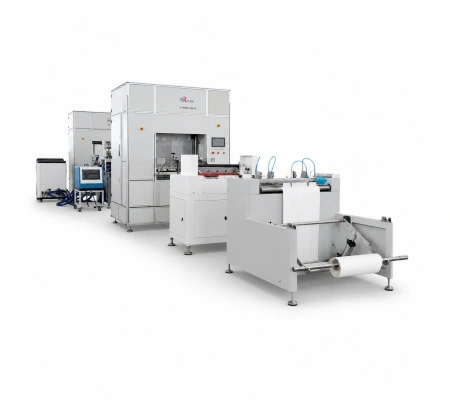
Pleating Height: 100–400 mm
Pleating Speed: 0–200 pleats/min
Max. Media Width: 700 mm
Max. Product Width: ≤650 mm
Production Capability: 25 m/min
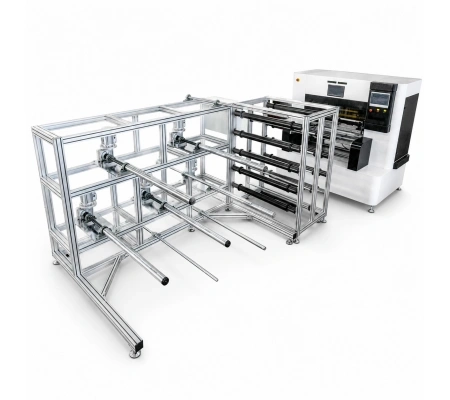
Working Width Range: 700–3000 mm
Pleating Height Range: 4–150 mm
Pleating Speed: Up to 400 pleats/min
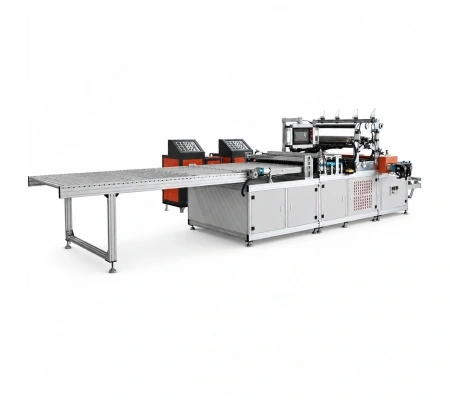
Max. Media Pleating Width: 1300 mm
Pleat Depth Range: 25–300 mm
Maximum Pleating Speed: 8–10 m/min
Hot Melt Nozzle Pitch: 25.4 mm
Online Slitting Cutters: 5 pcs
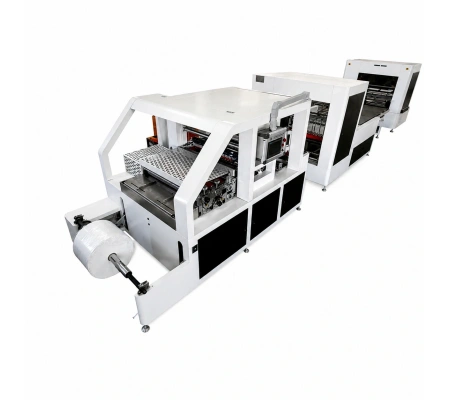
Max. Media Pleating Width: 700 mm
Pleat Depth Range: 16–100 mm
Maximum Pleating Speed: 8–10 m/min
Hot Melt Nozzle Pitch: 25.4 mm
Online Slitting Cutters: 5 pcs

Quick response within 24 hours

Expert advice tailored to your needs

End-to-end support for your success