News

Questions Covered in This Guide
To choose the right filter making machine, start from the filter product you want to produce. The machine should match the filter type, filter media, size range, filtration requirement, production capacity, automation level, and quality standard.
A filter making machine is not one fixed machine. It may refer to a pleating machine, gluing machine, cutting machine, PU molding machine, ultrasonic welding machine, assembly equipment, testing machine, or a complete filter production line. The correct choice depends on the production process behind the filter.
For example, a HEPA filter usually needs stable pleating, hot melt gluing, sealing, and leakage testing. A PU air filter needs mold matching, PU foaming, curing, and trimming. A cartridge filter may require pleating, cylindrical forming, end cap bonding, welding, and integrity testing.
1. Confirm Filter Product
HEPA filter, HVAC filter, air filter, cabin filter, PU air filter, cartridge filter, or industrial filter.
2. Check Filter Material
Filter paper, non-woven media, fiberglass, PP, activated carbon, mesh, or composite media.
3. Define Process Steps
Feeding, pleating, gluing, cutting, forming, welding, curing, assembly, and testing.
4. Match Capacity and Automation
Choose the machine level according to output target, labor plan, and batch stability.
Filter type is the first selection factor because different filters use different structures and production methods. A machine plan for HEPA filters cannot be directly used for PU air filters, cartridge filters, or HVAC panel filters.
| Filter Type | Main Production Focus | Common Machine Configuration |
|---|---|---|
| HEPA Filter | Pleat accuracy, stable spacing, sealing, leakage control | Mini pleating machine, hot melt gluing machine, cutting machine, frame assembly equipment, testing machine |
| HVAC Filter | Frame size, airflow resistance, media support, batch consistency | Pleating machine, cutting machine, frame forming machine, sealing or assembly equipment |
| Automotive Air Filter | Pleating, bonding, PU edge forming, curing stability | Pleating equipment, PU dispensing machine, mold system, curing oven, trimming equipment |
| Cabin Filter | Compact size accuracy, clean cutting, activated carbon layer handling | Pleating machine, slitting machine, cutting machine, side sealing or bonding equipment |
| Cartridge Filter | Cylindrical forming, end cap bonding, welding, integrity control | Pleating machine, forming machine, end cap bonding machine, welding machine, testing equipment |
| Oil, Fuel or Hydraulic Filter | Component assembly, sealing strength, pressure resistance | Pleating machine, center tube assembly, end cap bonding, housing assembly, leak testing equipment |
The same filter category may still have different machine plans. A simple panel filter may need only pleating, cutting, and frame assembly, while a high-efficiency filter may also need automatic glue control, sealing, and testing.
Material compatibility directly affects machine selection. Different filter media behave differently during feeding, pleating, bonding, cutting, welding, and forming. A machine that works well with one material may not process another material with the same stability.
| Filter Material | Production Impact | Machine Selection Point |
|---|---|---|
| Filter Paper | Common in air filters and automotive filters; needs stable feeding and clean pleating. | Check pleating method, tension control, and cutting accuracy. |
| Fiberglass Media | Common in HEPA filters; can be delicate during feeding and pleating. | Focus on media protection, stable pleat forming, and sealing quality. |
| Non-Woven Media | Used in HVAC filters, cabin filters, and pocket filters; may require welding or bonding. | Confirm feeding, cutting, ultrasonic welding, or side sealing compatibility. |
| Activated Carbon Media | Often used in cabin filters; thicker layers may affect cutting and folding. | Check layer alignment, cutting cleanliness, and media thickness range. |
| Metal Mesh or Wire Mesh | Used in some oil, hydraulic, and industrial filters; requires stronger forming or welding. | Confirm forming force, cutting method, welding method, and fixture design. |
| Food-Grade or Medical-Grade Media | May require cleaner contact surfaces and stricter process control. | Check material contact parts, cleaning convenience, and required compliance conditions. |
Material thickness, stiffness, surface structure, and layer composition should be confirmed before choosing equipment. These factors affect pleating pressure, glue adhesion, cutting force, welding stability, and finished filter consistency.
Production capacity should match the actual order volume. A machine that is too slow may cause bottlenecks, while a machine that is too complex may increase cost and operation difficulty when the order volume is still uncertain.
Capacity is not only about maximum speed. For filter production, stable output, quick adjustment, low waste, and repeatable quality are often more important than the highest machine speed.
Small-Batch Production
Suitable for new projects, many filter sizes, or trial production. Flexible machines with easy adjustment are usually more practical.
Stable Batch Production
Suitable for regular orders. Equipment combinations can improve consistency in pleating, gluing, cutting, forming, and testing.
High-Volume Production
Suitable for mature product models and large output. Automatic production lines can reduce manual operation and improve process connection.
When checking capacity, compare the output of each production step. For example, if the pleating machine is fast but cutting, gluing, or curing is slow, the whole production line may still have low real output.
Precision and process technology decide whether the finished filters can stay consistent. Important technical points include pleat height accuracy, glue line stability, cutting precision, welding strength, mold accuracy, sealing quality, and testing capability.
| Technology Point | What to Check | Why It Matters |
|---|---|---|
| Pleating Accuracy | Pleat height, pleat spacing, feeding stability, and media tension. | Affects filter area, appearance, airflow distribution, and assembly stability. |
| Gluing Accuracy | Glue position, glue volume, temperature control, and bonding consistency. | Affects pleat support, sealing strength, and leakage control. |
| Cutting Precision | Cut length, edge cleanliness, cutting force, and repeatability. | Affects filter size, frame fit, and finished appearance. |
| Welding or Sealing Technology | Ultrasonic welding, heat sealing, hot melt sealing, PU sealing, or epoxy sealing. | Affects leak control, bonding strength, and product reliability. |
| Filtration Requirement | Micron rating, mesh count, airflow resistance, or leakage requirement. | Helps decide whether standard equipment or more precise equipment is needed. |
For high-efficiency filters, small differences in pleating, sealing, or leakage control can affect final performance. For automotive or industrial filters, dimensional accuracy, bonding strength, and repeatability are often more important than machine appearance.
The automation level should match the production stage, labor plan, and output target. Manual, semi-automatic, and fully automatic filter making machines are suitable for different situations.
| Automation Level | Suitable Situation | Main Characteristics |
|---|---|---|
| Manual or Basic Equipment | Trial production, small output, frequent product changes. | Lower initial cost, more manual operation, higher dependence on workers. |
| Semi-Automatic Equipment | Stable product direction and moderate output. | Balances flexibility, efficiency, and investment cost. |
| Automatic Production Line | Large orders, stable models, higher consistency requirements. | Better process connection, reduced manual work, higher output stability. |
Higher automation is not always the best choice at the beginning. If the product model changes frequently, a flexible machine combination may be more useful than a highly customized automatic line.
Some filter products are used in industries with stricter quality or regulatory requirements, such as medical filtration, food and beverage filtration, cleanroom filtration, automotive filtration, and industrial process filtration. In these cases, machine selection should also consider the required standards and documentation.
Depending on the application, the production process may need to consider ISO-related quality management, FDA-related material requirements, ASTM test methods, clean production conditions, or customer-specific inspection standards. The machine itself should support the production process needed to meet these requirements.
Quality-Related Points to Confirm
Filter making machine cost should not be compared only by the initial quotation. A better comparison includes machine configuration, production efficiency, labor requirement, waste rate, maintenance difficulty, spare parts, energy consumption, and after-sales support.
| Cost Factor | What It Means | Why It Affects Selection |
|---|---|---|
| Initial Machine Price | The purchase cost of the machine or production line. | Needs to match budget and production stage. |
| Labor Cost | Manual work needed for feeding, handling, assembly, or inspection. | Higher automation may reduce labor but increase upfront investment. |
| Maintenance Cost | Routine maintenance, wear parts, repair, and downtime risk. | A machine that is easier to maintain can reduce long-term production interruption. |
| Energy Consumption | Power, heating, compressed air, glue systems, curing ovens, or pumps. | Affects long-term operating cost, especially in continuous production. |
| Technical Support | Installation guidance, training, troubleshooting, and spare parts supply. | Important for reducing downtime and helping operators use the machine correctly. |
A lower-priced machine may not always reduce total cost if it creates more material waste, unstable output, difficult maintenance, or frequent downtime. The selection should balance investment cost with long-term production reliability.
Before choosing a filter making machine, prepare the basic production information. This helps the equipment configuration match the real filter product instead of giving a general machine recommendation.
Information to Confirm Before Selection
Once these points are clear, choosing the right filter making machine becomes more accurate. The goal is not only to buy equipment, but to build a stable production process that can support the filter structure, output target, and quality requirement.
In simple terms, the right filter making machine should match four things at the same time: the filter product, the filter material, the required production process, and the expected production capacity.
If there are still questions about choosing the right filter making machine, machine configuration, automation level, or filter production process, MOER Machinery can provide further technical explanation based on the specific filter product and production method.
MOER Machinery focuses on filter making machine solutions for HEPA filters, HVAC filters, cabin filters, PU air filters, truck air filters, spin-on oil filters, hydraulic filters, high flow filter cartridges, and other industrial filter products.
Contact Us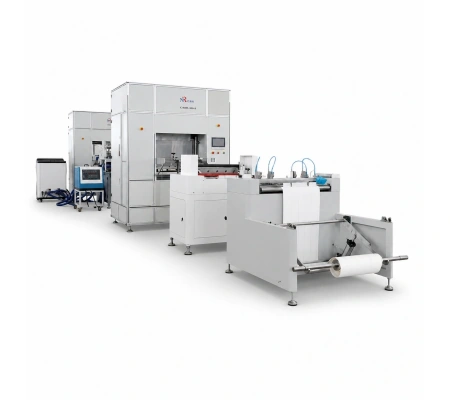
Pleating Height: 100–400 mm
Pleating Speed: 0–200 pleats/min
Max. Media Width: 700 mm
Max. Product Width: ≤650 mm
Production Capability: 25 m/min
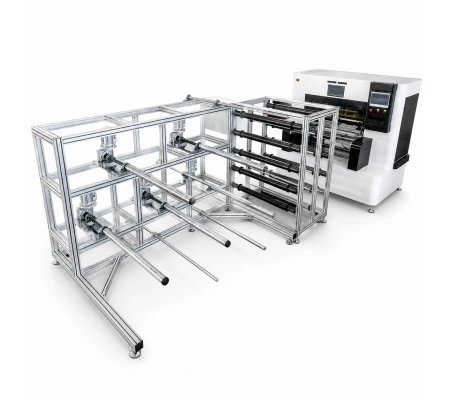
Working Width Range: 700–3000 mm
Pleating Height Range: 4–150 mm
Pleating Speed: Up to 400 pleats/min
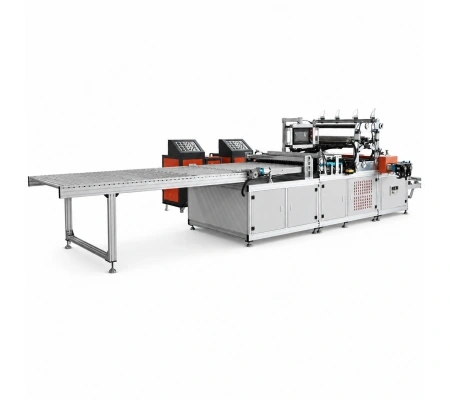
Max. Media Pleating Width: 1300 mm
Pleat Depth Range: 25–300 mm
Maximum Pleating Speed: 8–10 m/min
Hot Melt Nozzle Pitch: 25.4 mm
Online Slitting Cutters: 5 pcs
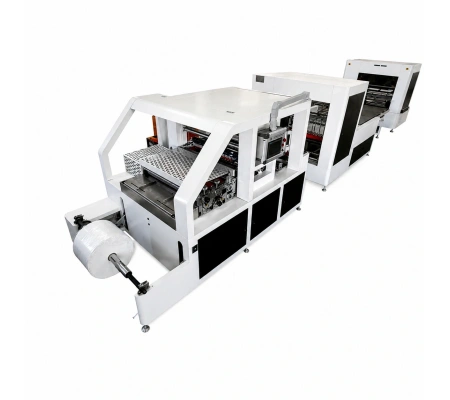
Max. Media Pleating Width: 700 mm
Pleat Depth Range: 16–100 mm
Maximum Pleating Speed: 8–10 m/min
Hot Melt Nozzle Pitch: 25.4 mm
Online Slitting Cutters: 5 pcs

Quick response within 24 hours

Expert advice tailored to your needs

End-to-end support for your success