
News

Questions Covered in This Guide
A pleated filter uses folded media to fit more filtration area into a compact frame or cartridge, helping air, water, oil, or fuel pass through while trapping particles.
Its key feature is the accordion-like structure. Instead of using one flat media layer, the filter media is folded into repeated pleats, so more material can fit inside the same frame, housing, or cartridge.
A pleated filter is used to place more filter media inside a limited frame, cartridge, or housing while keeping the product size compact.
| Reason | What It Means |
|---|---|
| More Filtration Area | Folded media provides more usable surface area than a flat filter of the same size. |
| Compact Structure | More media can fit into a fixed installation space. |
| Better Particle Loading | Particles have more media area to collect before the filter becomes heavily loaded. |
| More Stable Flow | A well-formed pleat structure helps air or fluid pass through the filter more evenly. |
Pleated filters are widely used in air, liquid, oil, fuel, hydraulic, and industrial filtration systems.
Air Filtration
HVAC filters, air purifiers, HEPA filters, cleanroom filters, and ventilation filters.
Vehicle Filters
Cabin filters, engine air filters, truck air filters, oil filters, and fuel filters.
Liquid Filtration
Water filters, hydraulic filters, process filters, and pleated cartridge filters.
Industrial Filtration
Dust collection, gas filtration, machinery protection, and industrial process filtration.
Common pleated filter materials include filter paper, fiberglass media, non-woven media, synthetic media, activated carbon media, wire mesh, and composite media.
| Material | Common Use |
|---|---|
| Filter Paper | Air filters, oil filters, fuel filters, and general pleated filter elements. |
| Fiberglass Media | HEPA filters, high-efficiency air filters, and cleanroom filtration. |
| Non-Woven or Synthetic Media | HVAC filters, cabin filters, pocket filters, and some liquid filters. |
| Activated Carbon Media | Cabin filters and odor-control air filtration products. |
| Wire Mesh or Composite Media | Hydraulic filters, industrial filters, and filters that need stronger support. |
In general, pleated filter production includes media feeding, pleating, bonding or gluing, cutting, assembly, and testing. The exact process depends on the product type, such as air filters, HEPA filters, oil filters, cartridge filters, or industrial filters.
Stable feeding, accurate pleating, clean cutting, and reliable bonding help the pleated filter keep its designed structure during production and use.
Pleat shape affects product consistency, assembly stability, and actual usable media area. Poor pleat shape can also make later gluing, cutting, frame assembly, or sealing harder to control.
| Pleat Problem | Possible Result |
|---|---|
| Compressed Pleats | The filter pack may become too dense, making airflow or fluid flow less smooth. |
| Uneven Pleat Height | The filter may be difficult to cut, frame, or assemble consistently. |
| Loose Pleats | Media may shift during handling, assembly, transport, or use. |
| Irregular Pleat Spacing | Glue lines, separators, frames, or sealing parts may not align properly. |
In simple terms, a pleated filter is used when more filtration area is needed inside a compact frame, cartridge, or housing.
No. Pleated filters are used in air, water, oil, fuel, hydraulic, and industrial filtration systems.
A pleated filter uses folded media to increase surface area, while a non-pleated filter usually uses flatter media with less usable area in the same space.
Not always. Pleated filters provide more surface area, but performance still depends on media type, pleat design, sealing, and application.
Main factors include media selection, pleat height, pleat spacing, bonding quality, frame support, and sealing design.
If there are still questions about pleated filters, pleating processes, or pleated filter production, MOER Machinery can provide further technical explanation based on specific filter products and production processes.
MOER Machinery focuses on filter making machine solutions for HEPA filters, HVAC filters, cabin filters, PU air filters, truck air filters, spin-on oil filters, hydraulic filters, high flow filter cartridges, pocket filters, and other industrial filter products.
Contact Us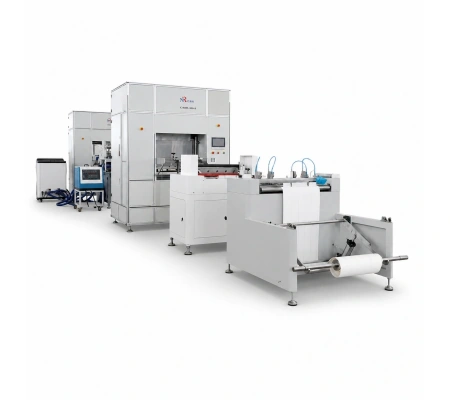
Pleating Height: 100–400 mm
Pleating Speed: 0–200 pleats/min
Max. Media Width: 700 mm
Max. Product Width: ≤650 mm
Production Capability: 25 m/min
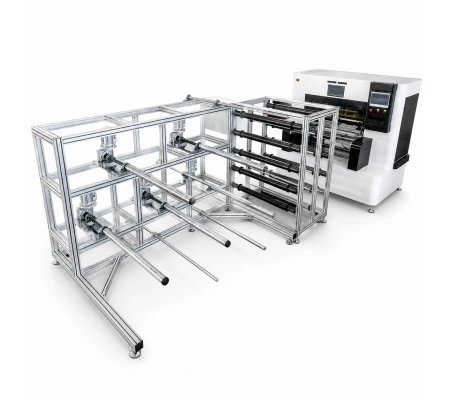
Working Width Range: 700–3000 mm
Pleating Height Range: 4–150 mm
Pleating Speed: Up to 400 pleats/min
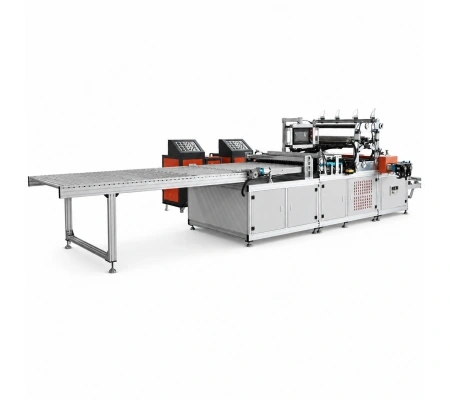
Max. Media Pleating Width: 1300 mm
Pleat Depth Range: 25–300 mm
Maximum Pleating Speed: 8–10 m/min
Hot Melt Nozzle Pitch: 25.4 mm
Online Slitting Cutters: 5 pcs
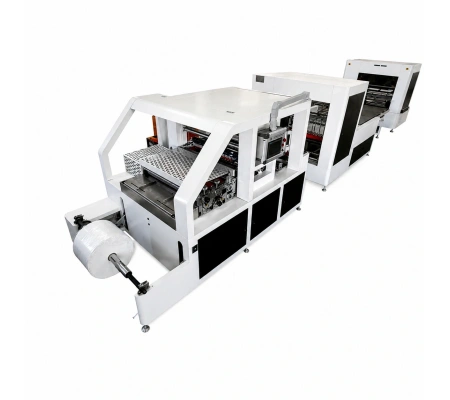
Max. Media Pleating Width: 700 mm
Pleat Depth Range: 16–100 mm
Maximum Pleating Speed: 8–10 m/min
Hot Melt Nozzle Pitch: 25.4 mm
Online Slitting Cutters: 5 pcs

Quick response within 24 hours

Expert advice tailored to your needs

End-to-end support for your success