
News

Questions Covered in This Guide
Filter media pleating folds flat filtration material into controlled pleats before cutting, bonding, framing, cartridge forming, sealing, or final assembly.
It is not the finished filter itself. It is a forming step that changes flat roll or sheet media into a pleated pack, so the material can be used in a compact filter structure.
This process is used before different downstream steps, such as hot melt gluing, side sealing, frame assembly, end cap bonding, cartridge rolling, welding, curing, or testing. The later steps depend on the final filter type.
During filter media pleating, flat media is guided, tensioned, folded, and shaped into repeated pleats. The media path changes from a flat sheet into a zig-zag pack with defined height and spacing.
| Before Pleating | During Pleating | After Pleating |
|---|---|---|
| Flat roll or sheet media | Media is guided through a controlled folding path | A pleated pack is formed for later cutting or assembly |
| No fixed pleat structure | Pleat height and spacing are shaped | The filter pack has a defined depth, width, and fold pattern |
| Media is not ready for frame or cartridge use | Creases are formed and stabilized | The pack can move to gluing, framing, cartridge forming, or sealing |
In many applications, the pleated shape helps expose more media surface to incoming air or fluid. However, the actual filtration result still depends on the media structure, pore size, sealing design, and working conditions.
Filter media is pleated to make flat material suitable for compact filter structures. Pleating is used when a product needs more usable media length inside a limited frame, cartridge, or housing.
| Production Purpose | What It Means |
|---|---|
| Use More Media Length | A longer media sheet can be arranged in a shorter filter space. |
| Prepare a Stable Filter Pack | The folded pack becomes easier to cut, glue, frame, roll, or seal. |
| Control Final Filter Size | Pleat height and width help define the later filter pack dimensions. |
| Support Flow Distribution | Regular spacing helps the finished filter avoid crowded or blocked media areas. |
Common materials for filter media pleating include filter paper, fiberglass media, PP synthetic media, polyester media, non-woven fabric, activated carbon media, wire mesh, and multi-layer composite media.
| Material | Pleating Behavior | Common Filter Use |
|---|---|---|
| Filter Paper | Forms clear creases but needs stable tension and moisture control. | Air filters, oil filters, fuel filters |
| Fiberglass Media | Requires gentle handling because the media can be delicate. | HEPA filters, cleanroom filters, high-efficiency air filters |
| PP or Polyester Synthetic Media | Heat response, elasticity, and stiffness affect pleat setting. | Liquid filters, cartridge filters, industrial filters |
| Non-Woven Fabric | Soft media may stretch, drift, or wrinkle if tension is unstable. | HVAC filters, cabin filters, pocket filters |
| Activated Carbon Media | Layer thickness and particle distribution can affect fold uniformity. | Cabin filters, odor-control filters |
| Wire Mesh or Composite Media | Higher stiffness may require stronger forming force and better support. | Hydraulic filters, gas filters, industrial filtration |
Filter media can be pleated by different methods. The method is usually selected according to media stiffness, pleat depth, working width, spacing accuracy, and the final filter structure.
| Pleating Method | How It Works | Typical Use |
|---|---|---|
| Knife Pleating | Uses blade or knife movement to form repeated folds. | Medium or deeper pleats in air, oil, hydraulic, and industrial filters |
| Rotary Pleating | Uses rotating wheels or rollers to form continuous pleats. | Continuous pleating for air filters, HVAC filters, and general media processing |
| Mini-Pleating | Forms smaller, closely spaced pleats, often with glue separation. | HEPA filters, ULPA filters, cleanroom filters, compact filters |
| Dimple Pleating | Creates small spacing points or dimples while forming the media. | Filters that need built-in spacing support without separate separators |
Pleating quality depends on how the media behaves during folding and how accurately the pleat structure is controlled. A poor pleated pack can create problems in cutting, gluing, assembly, or sealing.
| Quality Factor | Possible Issue if Not Controlled |
|---|---|
| Pleat Height | Filter pack size may not match the intended frame, cartridge, or housing. |
| Pleat Spacing | Crowded or irregular spacing may affect glue lines, separators, or assembly alignment. |
| Media Tension | Wrinkles, stretching, drifting, or uneven fold lines may appear. |
| Heating or Creasing | Too little setting may cause rebound; unsuitable heat may deform sensitive media. |
| Cutting Accuracy | The pack may be difficult to align in later framing, cartridge forming, or end cap bonding. |
| Material Stiffness | Very soft or very stiff media may need different folding force, support, or setting method. |
Filter media pleating is used in filters that need a structured media pack before final assembly. The pleated pack may be used in air, liquid, automotive, hydraulic, or industrial filtration products.
HVAC and Air Filters
Used for ventilation filters, air purifiers, panel filters, and general air filtration products.
HEPA and Cleanroom Filters
Used where small pleats, stable spacing, and careful media handling are required.
Liquid and Water Filters
Used in pleated cartridges for sediment, silt, and fine particle removal in liquid systems.
Automotive and Industrial Filters
Used in engine air filters, cabin filters, oil filters, hydraulic filters, dust collectors, and gas separators.
In simple terms, filter media pleating is a forming process that prepares flat filtration material for later cutting, bonding, cartridge forming, sealing, or final filter assembly.
The purpose is to turn flat media into a structured pleated pack that can fit more media length into a compact filter design.
No. Pleating forms the media pack. Assembly connects that pack with frames, end caps, housings, gaskets, mesh, or other parts.
Filter media pleating is the general folding process. Mini-pleating usually refers to smaller, closely spaced pleats used in HEPA, ULPA, and compact air filters.
No. The material must have suitable flexibility, thickness, strength, and fold retention. Some media may crack, stretch, rebound, or deform during pleating.
If there are still questions about filter media pleating, pleated pack forming, or how different filtration materials are processed, MOER Machinery can provide further technical explanation based on specific filter products and production processes.
MOER Machinery focuses on filter making machine solutions for HEPA filters, HVAC filters, cabin filters, PU air filters, truck air filters, spin-on oil filters, hydraulic filters, high flow filter cartridges, pocket filters, and other industrial filter products.
Contact Us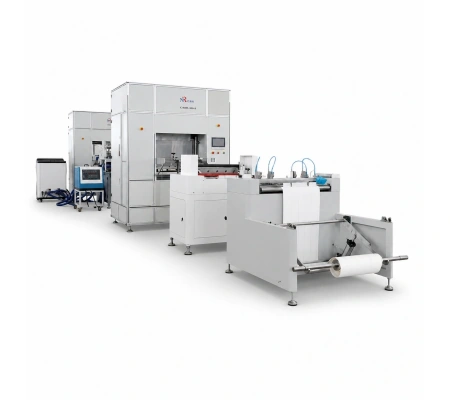
Pleating Height: 100–400 mm
Pleating Speed: 0–200 pleats/min
Max. Media Width: 700 mm
Max. Product Width: ≤650 mm
Production Capability: 25 m/min
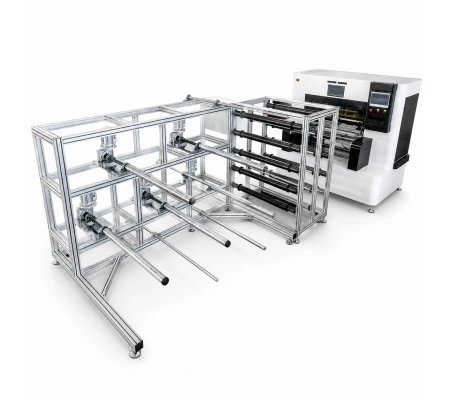
Working Width Range: 700–3000 mm
Pleating Height Range: 4–150 mm
Pleating Speed: Up to 400 pleats/min
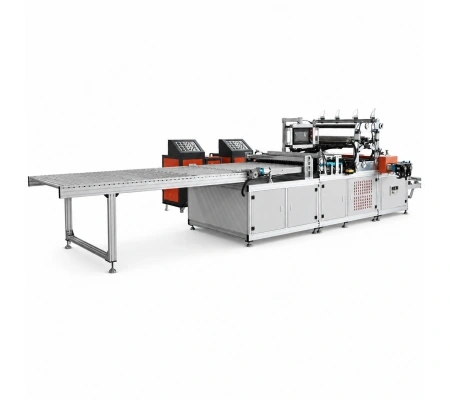
Max. Media Pleating Width: 1300 mm
Pleat Depth Range: 25–300 mm
Maximum Pleating Speed: 8–10 m/min
Hot Melt Nozzle Pitch: 25.4 mm
Online Slitting Cutters: 5 pcs
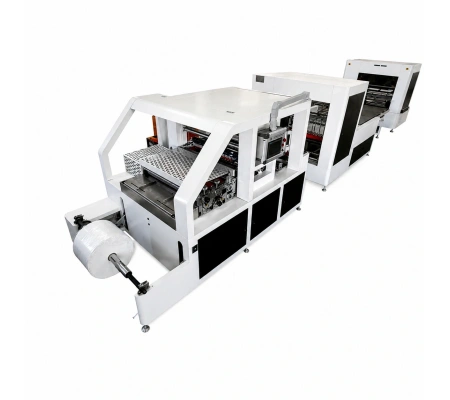
Max. Media Pleating Width: 700 mm
Pleat Depth Range: 16–100 mm
Maximum Pleating Speed: 8–10 m/min
Hot Melt Nozzle Pitch: 25.4 mm
Online Slitting Cutters: 5 pcs

Quick response within 24 hours

Expert advice tailored to your needs

End-to-end support for your success