News

Questions Covered in This Guide
An activated carbon cabin filter adds a carbon layer to a cabin filter, helping reduce certain odors and gases while the filter media captures dust and particles.
A standard cabin filter mainly focuses on particle filtration, such as dust, pollen, fibers, and road particles. An activated carbon cabin filter adds another functional layer: activated carbon. This layer is used for odor-control and gas adsorption requirements in vehicle HVAC air paths.
The key difference is not only the black or dark carbon appearance. The filter structure usually becomes a multi-layer material, so media thickness, carbon distribution, pleat stability, airflow resistance, and edge sealing all need closer control during production.
Activated carbon works through adsorption. Instead of only blocking particles like a physical screen, activated carbon provides a porous surface where certain odor and gas molecules can attach.
Particle Capture
The filter media layer helps capture dust, pollen, fibers, and other airborne particles entering the vehicle HVAC system.
Odor Reduction
The activated carbon layer helps reduce certain unpleasant odors from traffic, outside air, or environmental exposure.
Gas Adsorption Function
Activated carbon may help adsorb certain gaseous contaminants, depending on carbon material, filter structure, and working conditions.
Activated carbon should not be described as removing all odors or all harmful gases. Its actual performance depends on carbon quality, carbon amount, contact time, airflow rate, media structure, and usage environment.
Activated carbon can be added to cabin filter media as a carbon layer, carbon-loaded material, or multi-layer composite structure combined with particle filtration media.
| Carbon Structure | How It Is Used | Production Focus |
|---|---|---|
| Carbon Layer | A separate activated carbon layer is combined with particle filtration media. | Layer alignment, thickness control, bonding stability, and pleat forming. |
| Carbon-Loaded Media | Carbon is integrated into or attached to the filter media structure. | Carbon distribution, media flexibility, dust release control, and stable feeding. |
| Multi-Layer Composite Media | Particle filtration media, support layers, and carbon layers are combined in one filter structure. | Multi-layer feeding, pleat stability, strip bonding, trimming accuracy, and edge sealing. |
Compared with a single-layer cabin filter, activated carbon media can be thicker, heavier, and more sensitive to uneven tension. This makes feeding, pleating, bonding, and cutting stability more important.
Activated carbon filter media is different from standard non-woven media because it adds adsorption function, while standard non-woven media mainly focuses on particle capture.
| Comparison Point | Standard Non-Woven Cabin Filter Media | Activated Carbon Cabin Filter Media |
|---|---|---|
| Main Function | Captures dust, pollen, fibers, and general airborne particles. | Captures particles and adds adsorption function for certain odors and gases. |
| Material Structure | Usually single-layer or basic multi-layer non-woven structure. | Often includes carbon layer, carbon-loaded media, or composite layers. |
| Production Difficulty | Mainly focuses on media feeding, pleating, cutting, and edge forming. | Requires closer control of carbon distribution, layer alignment, thickness, and pleat stability. |
| Airflow Consideration | Airflow resistance depends on media density and pleat design. | Additional carbon layer may affect airflow resistance and filter thickness. |
Activated carbon cabin filters are commonly used in cars, buses, commercial vehicles, and vehicles that often operate in traffic, urban roads, tunnels, parking areas, or odor-exposure environments.
Urban Traffic Conditions
Used when outside air may contain exhaust smell, road dust, smoke-related odor, or other traffic-related exposure.
Passenger Vehicles
Used in cabin HVAC systems where both particle filtration and odor-control function are required.
Buses and Commercial Vehicles
Used when vehicles operate for long periods and require stable cabin airflow and filtration performance.
The application environment affects material choice and production design. A carbon cabin filter still needs to fit the vehicle HVAC housing, keep stable pleats, and maintain suitable airflow resistance.
Activated carbon cabin filter production should check carbon distribution, media thickness, pleat stability, strip bonding, edge sealing, airflow resistance, and finished filter size.
Activated Carbon Cabin Filter Production Checkpoints
In manufacturing, activated carbon cabin filters require more attention to material handling than standard single-layer cabin filters. Multi-layer feeding, pleat control, strip bonding, and clean trimming are key to stable production.
No. A standard cabin filter mainly captures particles, while an activated carbon cabin filter adds a carbon layer or carbon media for certain odor and gas adsorption functions.
No. Activated carbon can help reduce certain odors, but performance depends on carbon quality, airflow, exposure conditions, and filter structure.
The darker appearance usually comes from the activated carbon layer or carbon-loaded media inside the filter structure.
Yes. The carbon layer can affect media thickness, feeding stability, pleat forming, cutting accuracy, edge sealing, and airflow resistance.
Production may involve multi-layer media feeding, pleating, strip bonding, edge trimming, frame or edge forming, and inspection equipment depending on filter design.
If there are still questions about activated carbon cabin filter media, multi-layer feeding, pleating, strip bonding, edge trimming, or cabin filter production requirements, MOER Machinery can provide further technical explanation based on specific filter products and production conditions.
MOER Machinery focuses on filter making machine solutions for activated carbon cabin filters, cabin filters, air filters, pocket filters, mini pleat filter media, HEPA filters, PU air filters, truck air filters, hydraulic filters, high flow filter cartridges, and other industrial filter products.
Contact Us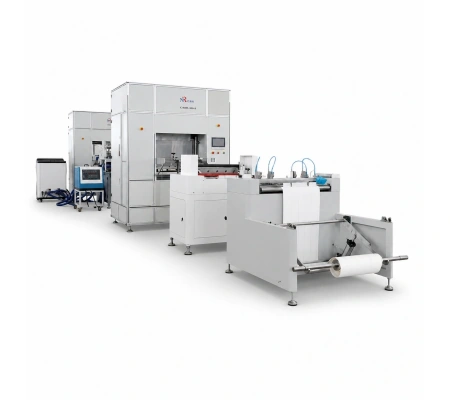
Pleating Height: 100–400 mm
Pleating Speed: 0–200 pleats/min
Max. Media Width: 700 mm
Max. Product Width: ≤650 mm
Production Capability: 25 m/min
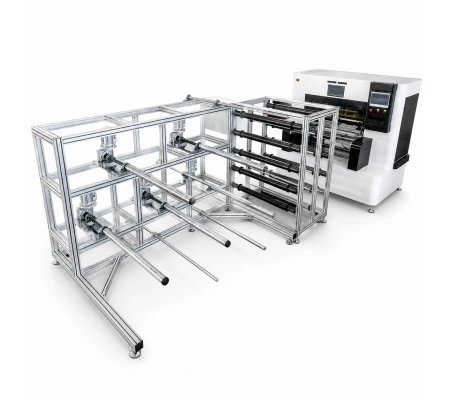
Working Width Range: 700–3000 mm
Pleating Height Range: 4–150 mm
Pleating Speed: Up to 400 pleats/min
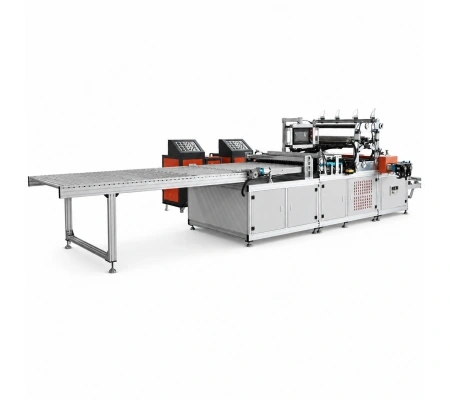
Max. Media Pleating Width: 1300 mm
Pleat Depth Range: 25–300 mm
Maximum Pleating Speed: 8–10 m/min
Hot Melt Nozzle Pitch: 25.4 mm
Online Slitting Cutters: 5 pcs
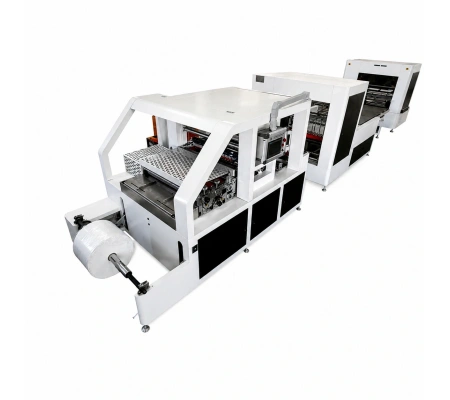
Max. Media Pleating Width: 700 mm
Pleat Depth Range: 16–100 mm
Maximum Pleating Speed: 8–10 m/min
Hot Melt Nozzle Pitch: 25.4 mm
Online Slitting Cutters: 5 pcs

Quick response within 24 hours

Expert advice tailored to your needs

End-to-end support for your success