
News

Questions Covered in This Guide
ISO 16890 classifies general ventilation air filters by efficiency against PM10, PM2.5 and PM1 particle groups, helping match filter classes to real dust and fine particles.
The main ISO 16890 classes include ISO Coarse, ISO ePM10, ISO ePM2.5, and ISO ePM1. These names show whether a filter is mainly designed for larger dust, fine particles, or stricter indoor air quality requirements.
ISO 16890 is mainly used for general ventilation air filters. It is common in building ventilation, air handling units, commercial filtration, indoor air quality projects, and filter replacement specifications.
In ISO 16890 labels, ePM means efficiency against a particulate matter group. The number after PM shows the particle group, such as PM10, PM2.5, or PM1.
| Example Label | How to Understand It | Practical Meaning |
|---|---|---|
| ISO Coarse | Mainly for larger-particle capture. | Often used for pre-filtration or basic dust control. |
| ISO ePM10 | Efficiency against PM10 particle group. | Related to larger dust, pollen, and coarse airborne particles. |
| ISO ePM2.5 | Efficiency against PM2.5 particle group. | Related to fine dust, smoke-related particles, and finer pollution particles. |
| ISO ePM1 | Efficiency against PM1 particle group. | Related to very fine particles and stricter indoor air quality requirements. |
| ISO ePM1 70% | The filter is in the ePM1 group with a stated efficiency percentage. | The percentage helps compare filters within the same class group. |
A higher class or percentage should not be viewed alone. Airflow, pressure drop, frame size, media structure, and maintenance conditions also affect whether the filter works properly in the air handling system.
PM1, PM2.5, and PM10 describe particle size groups. The smaller the number, the finer the particle group. ISO 16890 makes filter classification easier to understand by connecting filter performance with these common air quality terms.
| Particle Group | Common Examples | Related ISO 16890 Class | Typical Filter Direction |
|---|---|---|---|
| PM10 | Larger dust, pollen, plant spores, coarse road dust, construction dust, textile fibers. | ISO ePM10 or ISO Coarse, depending on efficiency level. | Pre-filters, coarse filters, panel filters, pocket filters for larger dust control. |
| PM2.5 | Fine dust, smoke-related particles, combustion particles, some industrial fine particles. | ISO ePM2.5. | Fine pocket filters, compact filters, pleated filters, higher-grade ventilation filters. |
| PM1 | Very fine combustion particles, fine smoke particles, some bacteria-sized particles, and other very fine airborne particles. | ISO ePM1. | High-efficiency general ventilation filters, compact fine filters, mini pleat filter structures for stricter air quality needs. |
These examples help explain what the ISO 16890 classes represent. Actual filter selection still depends on tested efficiency, airflow, pressure drop, filter size, and installation conditions.
Different ISO 16890 classes can correspond to different filter structures. The final product may be a panel filter, pocket filter, compact filter, pleated filter, or other ventilation filter design.
ISO Coarse Filters
Often used as pre-filters or basic dust filters. Production may involve panel filter forming, frame assembly, media cutting, and edge sealing.
ISO ePM10 Filters
Often used for larger dust and coarse particle control. Common product forms include panel filters, pocket filters, and pleated filters.
ISO ePM2.5 Filters
Used when finer particle capture is required. Related products may include fine pocket filters, compact filters, and pleated ventilation filters.
ISO ePM1 Filters
Used for stricter fine-particle control in general ventilation. Related products may include compact fine filters and mini pleat filter structures.
For filter manufacturing, these products may require different processes such as media cutting, pleating, pocket forming, frame assembly, hot melt gluing, edge sealing, gasket application, and final inspection.
In production planning, ISO 16890 is not only a label on the filter. It can influence filter media selection, pleat design, pocket structure, glue application, frame assembly, and testing requirements.
ISO 16890 is easier to connect with real air pollution categories because it uses PM particle groups. Older labels, such as G and F classes, may still appear in older project documents or legacy systems.
| Comparison Point | Older Filter Class Labels | ISO 16890 Classes |
|---|---|---|
| Label Style | Often uses G and F style labels. | Uses ISO Coarse, ePM10, ePM2.5, and ePM1. |
| Particle Connection | Less directly connected with PM10, PM2.5, and PM1 terms. | Directly linked to PM particle groups. |
| Practical Use | Still appears in older specifications and replacement references. | Useful for current ventilation, indoor air quality, and filter replacement discussions. |
ISO 16890 is not the same as HEPA or ULPA. ISO 16890 is used for general ventilation air filters, while HEPA and ULPA refer to high-efficiency air filter categories under different testing and classification systems.
| Item | ISO 16890 | HEPA / ULPA |
|---|---|---|
| Filter Scope | General ventilation air filters. | High-efficiency air filters. |
| Common Use | Commercial ventilation, building air handling, indoor air quality projects. | Cleanrooms, laboratories, air purifiers, and strict air cleanliness applications. |
| Production Direction | Panel filters, pocket filters, compact filters, pleated ventilation filters. | Mini pleat HEPA filters, separator HEPA filters, high-efficiency filter packs. |
This distinction is important for filter manufacturing. A fine ventilation filter under ISO 16890 and a HEPA filter may both use pleated media, but they are not classified by the same standard.
ISO 16890 is important when selecting or replacing general ventilation filters for air handling systems, commercial buildings, offices, schools, hospitals, and indoor air quality projects.
ISO 16890 Selection Checklist
ePM means efficiency against a particulate matter group. ISO ePM1, ePM2.5, and ePM10 describe filter efficiency for different PM particle groups.
PM10 may include larger dust, pollen, plant spores, coarse road dust, construction dust, and some textile fibers.
PM2.5 may include fine dust, smoke-related particles, combustion particles, and some industrial fine particles.
PM1 may include very fine combustion particles, fine smoke particles, some bacteria-sized particles, and other very fine airborne particles.
No. ISO 16890 is used for general ventilation filters. HEPA filters follow different high-efficiency filter standards.
ISO 16890 may apply to ventilation filter products such as panel filters, pocket filters, compact filters, and pleated air filters, depending on the tested class and efficiency.
If there are still questions about ISO 16890 air filter classes, PM1, PM2.5, PM10, filter structure, or air filter production requirements, MOER Machinery can provide further technical explanation based on specific filter products and applications.
MOER Machinery focuses on filter making machine solutions for air filters, pocket filters, mini pleat filter media, HEPA filters, cabin filters, PU air filters, truck air filters, hydraulic filters, high flow filter cartridges, and other industrial filter products.
Contact Us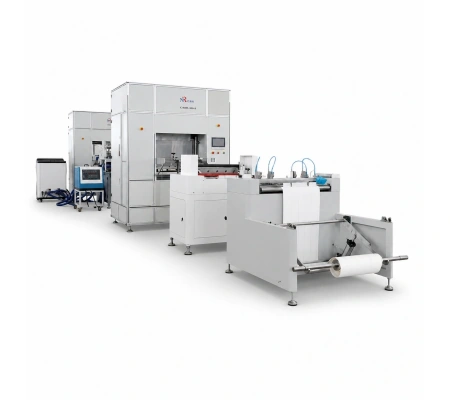
Pleating Height: 100–400 mm
Pleating Speed: 0–200 pleats/min
Max. Media Width: 700 mm
Max. Product Width: ≤650 mm
Production Capability: 25 m/min
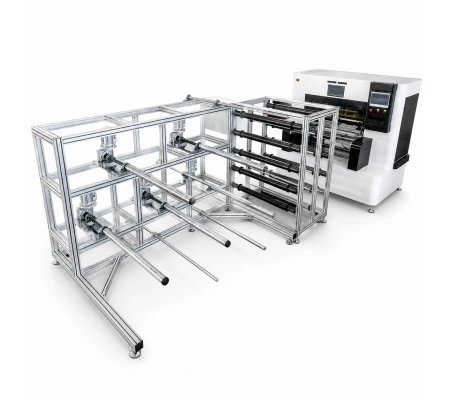
Working Width Range: 700–3000 mm
Pleating Height Range: 4–150 mm
Pleating Speed: Up to 400 pleats/min
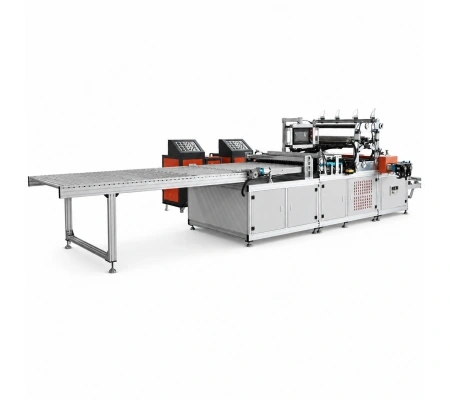
Max. Media Pleating Width: 1300 mm
Pleat Depth Range: 25–300 mm
Maximum Pleating Speed: 8–10 m/min
Hot Melt Nozzle Pitch: 25.4 mm
Online Slitting Cutters: 5 pcs
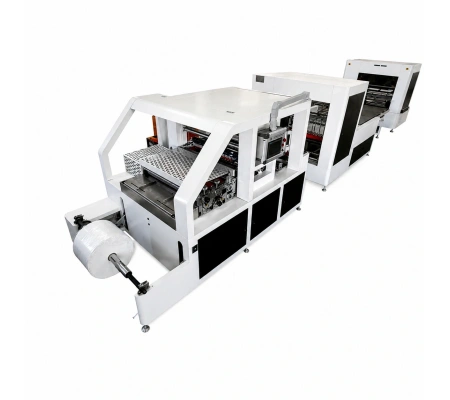
Max. Media Pleating Width: 700 mm
Pleat Depth Range: 16–100 mm
Maximum Pleating Speed: 8–10 m/min
Hot Melt Nozzle Pitch: 25.4 mm
Online Slitting Cutters: 5 pcs

Quick response within 24 hours

Expert advice tailored to your needs

End-to-end support for your success