News

Questions Covered in This Guide
MERV rating, or Minimum Efficiency Reporting Value, compares how well an air filter captures particles from 0.3 to 10 microns in a standard test range.
MERV is commonly used to describe air filter efficiency in ventilation and air handling systems. The scale usually runs from MERV 1 to MERV 20, with higher numbers indicating better capture of smaller airborne particles.
However, MERV should not be read as “higher is always better.” A higher rating can also increase airflow resistance if the system fan, filter size, or air path is not designed for it.
MERV rating measures how efficiently a filter captures particles within different particle size ranges. The rating is based on test performance rather than only on the filter’s appearance, thickness, or pleat count.
MERV is useful because it gives users a common way to compare air filters. But the rating should still be read together with pressure drop, airflow, filter size, and system requirements.
A higher MERV rating usually means better particle capture, but it does not automatically mean the filter is better for every system.
Better Particle Capture
Higher MERV filters can capture smaller particles more effectively than lower-rated filters.
Higher Airflow Resistance
A tighter filter structure may create more pressure drop if the system is not designed for it.
System Compatibility
The selected filter should match fan capability, air volume, filter slot size, and maintenance plan.
If a filter is too restrictive for the system, airflow may drop and the fan may work harder. The better choice is a MERV level that meets air quality needs while staying within the system’s airflow and pressure drop limits.
MERV ranges are often used to describe general filtration levels. The exact filter choice should still follow the system recommendation and application requirement.
| MERV Range | General Meaning | Common Use |
|---|---|---|
| MERV 1–4 | Basic capture of larger particles. | Basic equipment protection and simple air filtration needs. |
| MERV 5–8 | Improved capture of common dust and airborne debris. | Many residential and general commercial air systems. |
| MERV 9–12 | Better capture of finer particles than standard low-range filters. | Offices, schools, commercial buildings, and upgraded ventilation systems. |
| MERV 13–16 | Higher-efficiency capture for smaller particles. | Some hospitals, laboratories, clean environments, and systems designed for higher resistance. |
| MERV 17–20 | Very high-efficiency filtration range. | Specialized applications, not a direct replacement choice for ordinary systems. |
MERV-rated filters are commonly used in residential HVAC systems, commercial buildings, schools, offices, hospitals, laboratories, and general ventilation systems.
Residential Systems
Used in home heating, cooling, and ventilation systems where the filter must match the fan and filter slot.
Commercial Buildings
Used in offices, retail spaces, schools, and public buildings for general indoor air filtration.
Healthcare and Laboratories
Used where higher filtration levels may be required, depending on system design and air quality requirements.
Industrial Ventilation
Used in production or process environments where airborne particles need to be controlled.
MERV rating and HEPA are not the same. MERV is a rating scale used to compare air filter efficiency across a range of particle sizes. HEPA refers to a high-efficiency particulate air filter category with its own performance definition.
| Item | MERV Rating | HEPA |
|---|---|---|
| Meaning | A filter efficiency rating scale. | A high-efficiency air filter category. |
| Common Use | HVAC and general ventilation filter comparison. | Cleanrooms, air purifiers, laboratories, and high-efficiency air filtration systems. |
| Selection Note | Must match system airflow and pressure drop limits. | Must match required efficiency, sealing, airflow, and installation conditions. |
Before replacing a filter with a higher MERV rating, users should check the system recommendation, airflow requirement, filter size, fan capability, pressure drop, and maintenance frequency.
Higher MERV Filter Checklist
In simple terms, choose a MERV rating that meets the air quality requirement without creating more resistance than the system can handle.
MERV stands for Minimum Efficiency Reporting Value. It is used to compare how efficiently an air filter captures particles within the standard test range.
No. A higher MERV rating can improve particle capture, but it may also increase airflow resistance if the system is not designed for it.
Only if the system can handle the added resistance. Check the system recommendation, airflow requirement, filter size, and fan capability first.
It can. Higher-rated filters may use denser media or tighter structures, so pressure drop should be checked together with filtration efficiency.
No. MERV is a rating scale, while HEPA is a high-efficiency air filter category with a separate performance definition.
If there are still questions about MERV rating, air filter efficiency, pressure drop, or filter production requirements, MOER Machinery can provide further technical explanation based on specific filter products and applications.
MOER Machinery focuses on filter making machine solutions for HEPA filters, mini pleat filter media, cabin filters, PU air filters, truck air filters, spin-on oil filters, hydraulic filters, high flow filter cartridges, pocket filters, air filters, and other industrial filter products.
Contact Us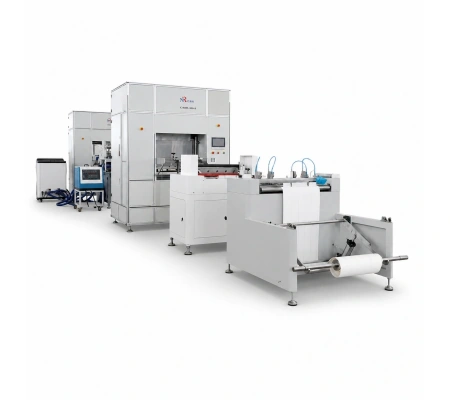
Pleating Height: 100–400 mm
Pleating Speed: 0–200 pleats/min
Max. Media Width: 700 mm
Max. Product Width: ≤650 mm
Production Capability: 25 m/min
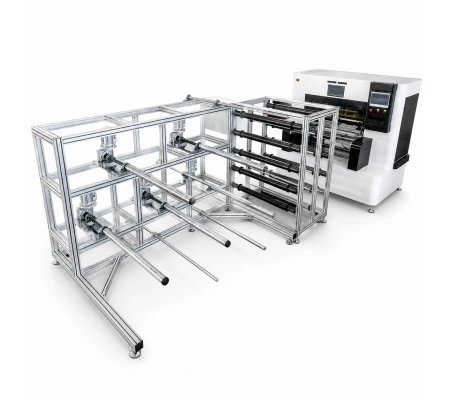
Working Width Range: 700–3000 mm
Pleating Height Range: 4–150 mm
Pleating Speed: Up to 400 pleats/min
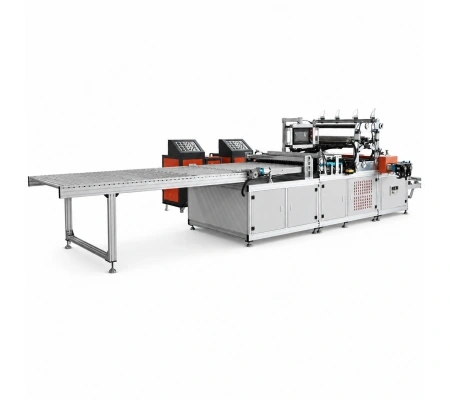
Max. Media Pleating Width: 1300 mm
Pleat Depth Range: 25–300 mm
Maximum Pleating Speed: 8–10 m/min
Hot Melt Nozzle Pitch: 25.4 mm
Online Slitting Cutters: 5 pcs
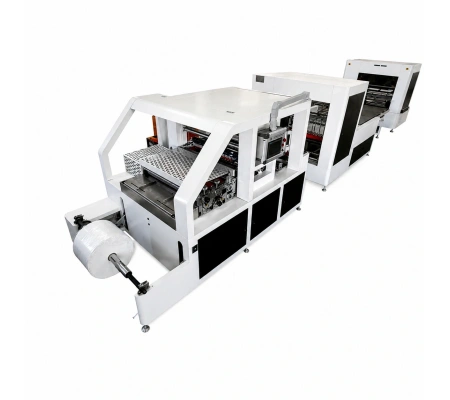
Max. Media Pleating Width: 700 mm
Pleat Depth Range: 16–100 mm
Maximum Pleating Speed: 8–10 m/min
Hot Melt Nozzle Pitch: 25.4 mm
Online Slitting Cutters: 5 pcs

Quick response within 24 hours

Expert advice tailored to your needs

End-to-end support for your success