
News

Buying a paper pleating machine is only one part of building a productive filter manufacturing process. A machine may have a high published speed, yet the factory can still miss its output target because of frequent changeovers, slow cutting or gluing, insufficient material preparation, quality losses or an unsuitable workshop layout.
A stronger production plan starts with the number of acceptable filter packs or finished filters that must be delivered. It then works backward through product mix, batch size, operating time, yield, downstream capacity, labor and factory conditions. This approach turns machine specifications into a practical output plan.
This guide focuses on production engineering and project planning rather than basic equipment types. If the forming method has not yet been decided, first review the paper pleating machine types and selection guide and MOER's available filter pleating machines.
The production target should be expressed in acceptable pleated packs or finished filters per shift, day and month. A speed stated in meters per minute or pleats per minute is useful, but it is not the same as sellable output.
Before discussing a paper pleating machine configuration, define the following business and production inputs:
| Planning Input | Information Required | Why It Affects the Project |
|---|---|---|
| Monthly demand | Good filters or pleated packs required each month | Establishes the minimum usable capacity |
| Product mix | Quantity and percentage for each filter family | Shows whether the line will run one stable product or many changing specifications |
| Typical batch size | Units made before the next product change | Determines how much time is lost to setup and approval |
| Working calendar | Days per month, shifts per day and scheduled hours per shift | Converts monthly demand into an hourly target |
| Quality yield | Expected percentage of output accepted as good product | Prevents rejected packs from being counted as capacity |
| Planned downtime | Cleaning, roll changes, maintenance, meetings and inspection time | Reduces the hours available for production |
| Demand variation | Seasonal peaks, urgent orders and new project launches | Shows whether additional capacity or scheduling flexibility is needed |
| Growth plan | Expected product and volume changes over the next project stages | Helps avoid a layout or configuration that cannot be expanded |
Required good output per hour = Monthly good output target / Scheduled production hours per month
For example, a factory needs 120,000 acceptable pleated packs per month. It operates 22 days per month, two shifts per day and eight scheduled hours per shift.
120,000 / (22 × 2 × 8) = approximately 341 good packs per scheduled hour
This value is only the starting point. It does not yet allow for stops, slower running or rejected material. Those losses must be added before the required machine and line capacity can be estimated.
Paper pleating machine speed can be presented in different units. Knife pleaters are often described in pleats per minute, while continuous rotary or integrated lines may use meters per minute. Neither unit directly tells a buyer how many acceptable filter packs will be produced during a shift.
Theoretical pack equivalents per minute = Pleating speed / Pleats required per pack
If a product requires 60 pleats and a machine is planned to run at 300 pleats per minute, the theoretical result is five pack equivalents per minute. This does not include the media between packs, startup material, cutting response, batch interruptions or rejected pleats.
Theoretical pack equivalents per minute = Media feed length per minute / Flat media length consumed per pack
If the process runs at 20 m/min and one pleated pack consumes 2.5 m of flat media, the theoretical result is eight pack equivalents per minute. The supplier should confirm exactly where line speed is measured and whether the stated rate applies to the required paper, width and pleat structure.
A practical planning estimate should allow for three groups of loss:
Estimated good output = Theoretical output × Availability × Performance × Quality yield
Using an illustrative theoretical rate of five packs per minute, 85 percent availability, 90 percent performance and 97 percent quality yield:
5 × 0.85 × 0.90 × 0.97 = approximately 3.71 good packs per minute
The percentages in this example are not promised machine results. Each factory should replace them with trial data, operating experience or agreed project assumptions. The purpose of the calculation is to stop maximum speed from being mistaken for guaranteed good output.
Create at least three planning cases:
A project that works only in the peak case is likely to be vulnerable to order changes and normal factory interruptions.
A paper pleating machine may be expected to produce dozens or hundreds of filter models. Planning every model as a separate project creates unnecessary complexity. A better approach is to group products that share similar media and process settings.
| Field | Example Grouping Question |
|---|---|
| Filter application | Are the products cabin, panel air, truck, oil, hydraulic or industrial filters? |
| Media construction | Do they use the same paper grade, layer count, carbon layer or mesh support? |
| Working width | Can the products share roll preparation and guide settings? |
| Pleat range | Do they use similar pleat heights, pitches and fold profiles? |
| Pack specification | Are pleat count, cut length and finished pack dimensions similar? |
| Bonding requirement | Do they use the same glue pattern, strip bonding or clipping method? |
| Downstream route | Will the pack enter a frame, PU mold, center tube or end-cap process? |
| Order pattern | Are batches long and repeated or small and frequently changed? |
The matrix reveals which products can use common tooling and saved recipes. It also identifies outlier products that may require separate parts, a wider machine, a special module or a different production route.
Changeover time may include stopping the line, removing the previous roll, cleaning paper dust or adhesive, changing knives or rollers, loading a new recipe, adjusting guides, running trial material and approving the first acceptable pack.
Available running time = Scheduled time - Changeover time - Planned service time - Other planned stops
A line that changes products six times per shift can lose much more capacity than one running the same filter all day. For high-mix production, faster and repeatable changeovers may be more valuable than a higher maximum pleating speed.
Where order requirements allow, schedule products with similar paper, width, pleat height or glue settings in the same campaign. This can reduce cleaning and adjustment work while making first-piece approval easier to manage.
The output of a filter production line is controlled by its constraint, not by its fastest machine. If the paper pleating machine makes five pack equivalents per minute but the forming station accepts only two, the sustained line rate cannot exceed the slower process without accumulating unfinished material.
A filter production route may include media preparation, pleating, counting, cutting, glue application, pack joining, cylindrical forming, curing, assembly and inspection. MOER's guide to machines required for a filter manufacturing plant provides a broader process reference.
| Process | Capacity Question | Possible Constraint |
|---|---|---|
| Roll preparation | Can rolls be loaded and joined without long production stops? | Slow roll handling or unavailable prepared material |
| Pleating | What speed is stable for the actual paper and pleat specification? | Media sensitivity or frequent recipe changes |
| Counting and cutting | Can cutting follow the required pack rate and length tolerance? | Cutting cycle, manual collection or inspection delay |
| Gluing or bonding | Can adhesive be applied and stabilized at the incoming rate? | Heating time, glue refill, curing or pattern changes |
| Forming and joining | How many packs can be formed and closed per minute? | Manual handling, fixture cycle or seam process |
| Assembly | Are frames, end caps, center tubes and housings supplied at the same rate? | Part shortages or slow component positioning |
| Inspection | Can the quality plan inspect output without creating a queue? | Long test cycle or insufficient fixtures |
A buffer is controlled space for work in process between operations. It can keep pleating from stopping every time a downstream station pauses. However, excessive buffer stock increases handling, occupies floor space and can allow pleated media to become mixed, contaminated or deformed.
Use a buffer when two processes have different cycle patterns, when adhesive needs stabilization time, when a downstream operation is manual or when independent quality approval is required. Define the maximum quantity, identification method and storage condition for each buffer.
An integrated line can reduce manual transfer and synchronize related operations. For example, the JSMR-PP-700 Filter Media Pleating and Gluing Production Line combines CNC knife pleating with hot melt application for hydraulic filter media.
Separate machines can be more practical when products follow different downstream routes, batch sizes are small, changeovers are frequent or an existing process already has enough capacity. Integration should solve a defined handling or capacity problem rather than being treated as an automatic requirement.
The most automated paper pleating machine project is not automatically the most economical. Automation creates value when the product specification, material supply and order volume are stable enough to use it. A high-mix factory may need flexible adjustment and independent stations, while a repeated high-volume product may justify closer process connection.
| Production Situation | Practical Automation Direction | Main Planning Priority |
|---|---|---|
| Small batches and frequent specification changes | Flexible stand-alone or semi-automatic stations with manual assistance | Controlled entry investment, easy setup and reusable tooling |
| Regular orders across several filter families | Automatic equipment for key bottlenecks with flexible process connections | Higher good output while retaining product variety |
| Stable large batches and repeated product routes | Integrated feeding, pleating, gluing, cutting, handling and inspection where justified | Continuous flow, less repeated handling and process visibility |
MOER separates these situations into three project references:
If manual cutting limits output, increasing pleating speed will only create a larger queue. If roll changes cause repeated stops, better material preparation may create more usable capacity than replacing a downstream machine. Measure lost time by cause before deciding where the next investment should go.
For multi-product factories, automation should also reduce setup variation. Saved recipes, controlled guide positions, repeatable knife or roller settings, automatic counting and clear parameter access can shorten the path from a changeover to the first accepted pack.
Where different working widths are required, compare the product matrix with a scalable series such as the JSMR-AUTO-700-3000 Automatic Knife Pleating Machine, then select the model and optional modules from the real width and output plan.
A drawing that shows only the paper pleating machine footprint is not a complete layout. The workshop must also provide space for roll movement, operating access, maintenance, intermediate storage, downstream equipment, quality inspection and safe movement of people and materials.
| Zone | Main Function | Layout Check |
|---|---|---|
| Incoming media storage | Stores filter paper and related roll materials before production | Allow roll identification, protected storage and handling access |
| Material preparation | Stages rolls, verifies labels and prepares the next production order | Avoid blocking the operating side of the pleater |
| Pleating cell | Houses feeding, conditioning, folding, counting and optional slitting | Include roll-loading path, operator position and maintenance clearance |
| Controlled WIP buffer | Holds identified pleated packs before the next process | Set quantity limits and protect packs from compression or mixing |
| Downstream processing | Supports gluing, forming, curing, assembly or sealing | Arrange stations in process order and reduce unnecessary backtracking |
| Quality area | Performs first-piece, in-process and final checks | Keep inspection tools available without interrupting material flow |
| Approved output storage | Separates accepted packs from material awaiting inspection | Use clear status identification and suitable pack support |
Mark power, compressed air, exhaust or ventilation where required, network connection, lighting and maintenance access on the same layout. Confirm cable and air-line routes so they do not interfere with roll transport or operator movement. Requirements for guarding, emergency access, fire protection and workplace safety must follow the machine documentation and applicable local rules.
Equipment dimensions alone do not show the space needed to replace a roll, remove a forming component, open an electrical enclosure, service a heater or access a glue unit. Obtain a supplier layout that identifies operating side, service side, material entry, product exit and component-removal paths.
Raw rolls should move toward the paper pleating machine without crossing finished products whenever practical. Pleated packs should continue to the next process with limited turning, carrying and temporary placement. A simple flow often reduces handling time and makes batch status easier to see.
Stable production depends on repeatable inputs. If paper rolls from different lots behave differently, operators may change speed, tension or temperature without recording why. The next batch then starts without a reliable reference.
Each roll should be linked to its supplier, grade, lot, width and receiving status. Store and condition filter media according to the material supplier's recommendations. Protect the roll edges and surface because damage introduced before pleating can continue through the full pack.
A useful paper pleating machine recipe may include:
Do not record all waste under one general category. Separate startup material, roll-end loss, changeover trials, paper defects, setting errors, cutting rejects and downstream damage. The largest repeated loss category usually gives a clearer improvement priority than total waste alone.
Quality inspection should not wait until the end of the shift. A wrong pleat count or height can continue through hundreds of packs if the first-piece and in-process checks are not defined.
| Characteristic | What to Verify | Planning Purpose |
|---|---|---|
| Media identity | Correct paper grade, lot and layer construction | Prevents the wrong material from reaching pleating |
| Working width | Media or slit width against the product specification | Supports downstream fit and pack dimensions |
| Pleat height | Measured height at defined points across the pack | Detects setup, tension or forming variation |
| Pleat pitch and count | Spacing pattern and total folds per finished pack | Controls media quantity and pack length |
| Squareness and alignment | Side alignment and pack geometry | Helps later joining, forming and frame installation |
| Surface condition | Tears, cracks, crushing, contamination and edge damage | Finds material or handling problems before assembly |
| Pack dimensions | Length, width and height after the defined handling condition | Confirms compatibility with the finished filter design |
| Bonding pattern | Glue position, continuity and spacing when fitted | Verifies an integrated pleating and gluing process |
Finished filters may require additional performance or integrity checks beyond pleat inspection. MOER's filter testing machine category covers equipment for different filter and media test requirements.
Equipment acceptance should be based on agreed products and measurable results. A general statement that the paper pleating machine “runs normally” is too broad to prove that it can meet the production plan.
The factory acceptance test, or FAT, is normally completed at the supplier's facility before shipment. The protocol should identify the media, filter specification, settings, test duration, inspection method and acceptance criteria.
| FAT Item | What Should Be Agreed |
|---|---|
| Test products | Representative normal product, difficult material and range-limit format where relevant |
| Test media | Actual production-grade paper with enough material for setup and sustained running |
| Output target | Good packs per minute or hour under the defined product conditions |
| Sustained run | Agreed running duration without excluding normal inspection and material handling |
| Quality criteria | Pleat geometry, pack dimensions, damage limits and accepted quantity |
| Changeover demonstration | Required steps, parts, time and first-piece approval for a selected format change |
| Functional checks | Controls, alarms, counters, heaters, sensors, optional modules and safety functions |
| Documentation | Manuals, drawings, parameter records, parts list and maintenance information |
The site acceptance test, or SAT, verifies installation and operation under the buyer's utilities, layout and normal working conditions. It should confirm machine leveling, power and air connection, material flow, safety checks, recipe recovery, product results and operator use.
Record total material input, total packs produced, accepted quantity, rejects, stop time and reasons for loss. This makes it possible to compare the acceptance run with the practical capacity model instead of checking speed alone.
The purchase price of a paper pleating machine is visible, but several other costs determine the real investment and the cost of each acceptable pack.
Estimated production cost per good pack = Total period production cost / Accepted packs produced in the same period
This calculation should use good output, not total machine cycles. A configuration with a lower purchase price can become more expensive per pack if it requires more labor, produces greater changeover loss or creates repeated manual handling.
For each proposed line, compare the same demand forecast, shift pattern, product mix, quality criteria and project period. Separate expected savings from unverified assumptions. MOER's filter equipment investment plans provide three starting configurations that can be reviewed against the factory's actual products and capacity goals.
A new project does not need to automate every operation immediately, but it should avoid decisions that make later growth unnecessarily difficult.
When demand grows, measure where output is being lost before buying another paper pleating machine. If pleating is already waiting for gluing, curing or assembly, adding another pleater will not increase finished-filter output. Expansion should increase capacity at the active constraint and then rebalance the line.
Unused space has a cost, but rebuilding utilities and moving installed equipment also has a cost. Mark the likely second-stage equipment and material route on the initial layout so the reserved area has a defined purpose.
A supplier can build a more useful production proposal when commercial demand, product information and factory conditions are provided together. The request should include:
MOER can use this information to review the paper pleating machine, connected processes and automation scope as one project. Contact MOER Machine with your filter drawings, media samples, output plan and workshop layout.
Divide the monthly good-output target by scheduled production hours, then allow for changeovers, planned stops, realistic running speed and quality yield. Express the final requirement in acceptable pleated packs or finished filters per hour, not only pleats or meters per minute.
Published speed may not include roll changes, setup, inspection, cutting cycles, material behavior, downstream waiting or rejects. Actual good output also depends on the specific paper width, pleat geometry and batch pattern.
Not necessarily. A complete line is easier to justify when product routes and order volumes are stable. Small or frequently changing batches may benefit from flexible independent stations that can be expanded after demand becomes more predictable.
A controlled buffer can be useful when the next process has a different cycle, requires manual handling, includes curing or needs separate quality approval. Its maximum quantity and identification method should be defined so packs do not accumulate without control.
Use the most commercially important product as the main test, then add a difficult material or range-limit specification when it creates a significant project risk. The actual production-grade paper should be supplied in enough quantity for setup and a sustained run.
There is no universal percentage. Reserve capacity according to demand variation, forecast confidence, shift options, changeover frequency and expansion cost. Compare conservative, expected and peak scenarios rather than relying on one forecast.
Add pleating capacity when measured demand exceeds practical good output and pleating is the actual line constraint. If another process is causing the queue or downtime, improve that bottleneck first.
Previous: NULL
Next: Paper Pleating Machine: How It Works, Types and Selection Guide
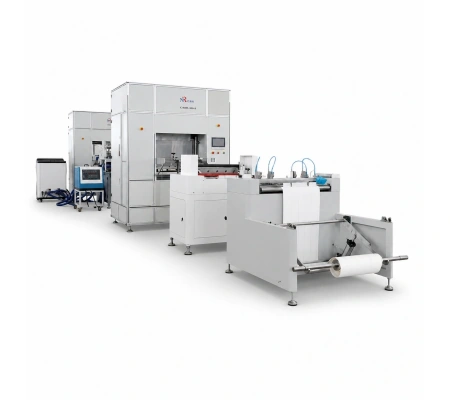
Pleating Height: 100–400 mm
Pleating Speed: 0–200 pleats/min
Max. Media Width: 700 mm
Max. Product Width: ≤650 mm
Production Capability: 25 m/min
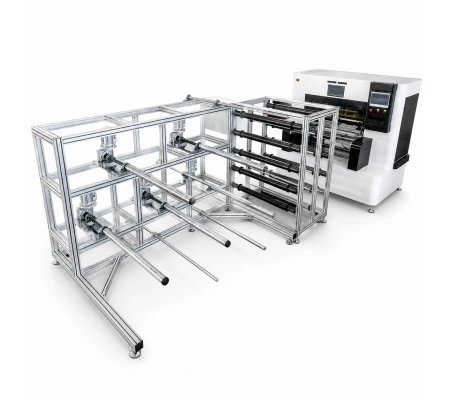
Working Width Range: 700–3000 mm
Pleating Height Range: 4–150 mm
Pleating Speed: Up to 400 pleats/min
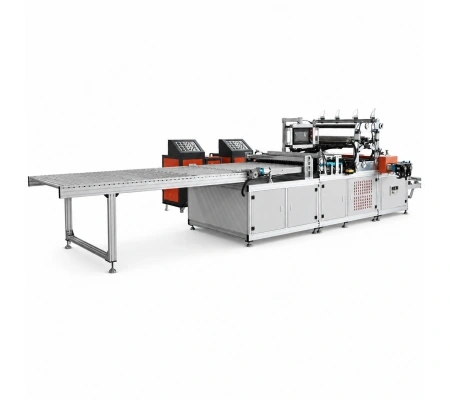
Max. Media Pleating Width: 1300 mm
Pleat Depth Range: 25–300 mm
Maximum Pleating Speed: 8–10 m/min
Hot Melt Nozzle Pitch: 25.4 mm
Online Slitting Cutters: 5 pcs
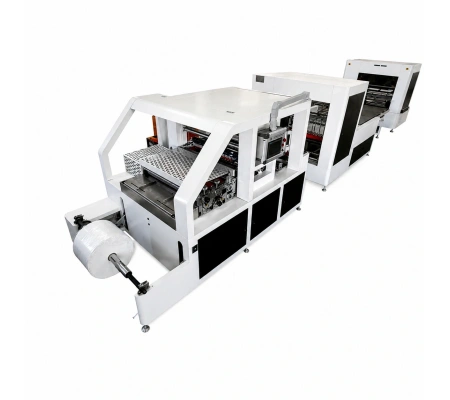
Max. Media Pleating Width: 700 mm
Pleat Depth Range: 16–100 mm
Maximum Pleating Speed: 8–10 m/min
Hot Melt Nozzle Pitch: 25.4 mm
Online Slitting Cutters: 5 pcs

Quick response within 24 hours

Expert advice tailored to your needs

End-to-end support for your success